

Sourcing custom scarves for Oman National Day requires more than choosing a design and requesting the lowest unit price. For bulk orders, the final cost and delivery feasibility depend on the complete product specification, including fabric composition, GSM, dimensions, printing method, edge finishing, packaging, order quantity, and shipping requirements.
For buyers planning orders of 9,000, 10,000, or 15,000 pieces, even small differences in fabric weight or packing efficiency can affect the total purchasing cost. Two suppliers may quote the same scarf size and use the term "satin fabric," yet the actual material, finished weight, printing process, or carton specification may be different.
This guide explains how to define a bulk custom scarf order for Oman National Day, compare supplier quotations, and plan production and delivery based on the actual requirements of an event or promotional project.
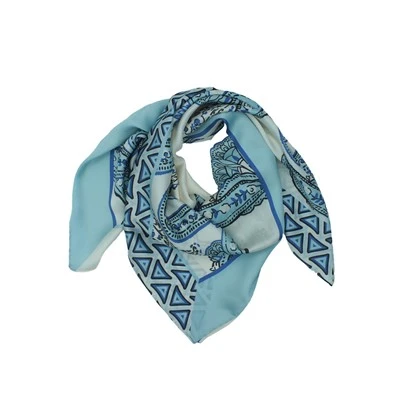
Quick Answer: What Should Buyers Confirm Before Ordering?
Before requesting quotations for custom Oman National Day scarves, buyers should confirm the following specifications:
| Purchasing Factor | Information to Confirm |
|---|---|
| Product | Custom promotional or event scarf |
| Material | Polyester satin or another selected fabric |
| Fabric Weight | GSM and material composition |
| Finished Size | Length × width |
| Printing | Full-color sublimation or another suitable process |
| Artwork | Final design, logos, text, and print placement |
| Edge Finishing | Simple sewn edge, hem, or another specified finish |
| Quantity | Separate quantities for comparison |
| Packaging | Individual packing and master-carton requirements |
| Shipping | EXW, FOB, or CIF quotation |
| Delivery | Destination port and required arrival date |
A complete specification allows suppliers to quote the same product standard. Without this information, a lower quotation may simply represent a different fabric, lighter GSM, simpler construction, or different packing method.
For large-volume orders, accurate specification is usually more important than requesting a price before the product itself has been clearly defined.
Define the Scarf Specification Before Comparing Prices
The foundation for accurate quotations and bulk cost control
The first step in a bulk scarf project is to define exactly what will be produced.
For example, a request for a 140 cm × 15 cm custom satin scarf with full-color printing still leaves several important questions unanswered.
The buyer may also need to specify:
These details influence both production and pricing.
A quotation should therefore be based on a complete specification rather than a general product name.
This is particularly important for large promotional orders. A small difference in material weight may have a limited impact on one scarf, but the difference becomes more significant when multiplied across 10,000 or 15,000 pieces.
Creating one confirmed specification sheet also gives buyers a consistent basis for evaluating different suppliers.
Choosing the Right Fabric for a Promotional Scarf
Aligning material characteristics with event requirements and budget targets
The suitable fabric depends on how the scarf will be used.
A scarf intended for large-scale event distribution usually has different requirements from a retail scarf. Promotional projects often focus on visual impact, printing compatibility, controlled material cost, and efficient packing. Retail-oriented products may place greater emphasis on hand feel, fabric construction, and decorative details.
Polyester-based satin is commonly considered for projects requiring full-color graphics because its smooth surface can support detailed printed artwork when the selected fabric and printing process are compatible.
When selecting a material, buyers should evaluate:
The objective is to select a fabric that matches the project rather than simply choosing the lowest-cost option.
Hangzhou XingHeMei Imp. & Exp. Co.,Ltd can review scarf material options according to the intended application, design requirements, printing method, target specification, and budget.
This allows the product standard to be evaluated before bulk production is confirmed.
Why Satin GSM Matters in a Bulk Order
Evaluating fabric density, material consumption, and accurate quotation comparison
GSM, or grams per square meter, should be confirmed before comparing quotations because it affects fabric consumption, finished weight, drape, and product cost.
A lower-GSM fabric generally uses less material and produces a lighter scarf. A higher-GSM fabric increases material consumption and may change the opacity and feel of the finished product.
However, higher GSM is not automatically the better choice.
The correct fabric weight depends on the project requirements:
Lower-GSM Option
Appropriate when the priority is cost control and lightweight distribution.
Medium-Weight
Provides a balance between material consumption and finished appearance.
Heavier Option
Selected when the project requires a more substantial finished product.
The most useful way to compare supplier quotations is not simply comparing satin scarf vs. satin scarf.
Instead, buyers should compare:
This provides a clearer basis for determining whether the suppliers are actually quoting the same product.
Printing Requirements for Oman National Day Designs
Ensuring design accuracy, color precision, and structured pre-production workflow
An Oman National Day scarf may include national colors, flags, logos, Arabic text, English text, or event-specific graphics.
For polyester fabrics compatible with the process, sublimation printing may be considered for full-color designs.
Before production begins, the buyer should confirm:
Artwork confirmation is particularly important for high-volume orders. A minor error in a logo or text layout can become a large production issue if thousands of pieces are printed before the problem is identified.
A practical development sequence is:
The approved sample should serve as the reference for the confirmed material, dimensions, printing layout, and finishing requirements.
Hangzhou XingHeMei Imp. & Exp. Co., Ltd can coordinate the product requirements from sample development through printing, finishing, and packing based on the approved specification.
How Order Quantity Affects the Factory Price
Analyzing production efficiency, unit cost, and total project investment
When buyers request quotations for several quantities, each volume should be priced separately.
For example:
Order quantity can influence fabric purchasing, production scheduling, printing efficiency, labor allocation, packaging consumption, and carton utilization.
However, the lowest unit price should not be the only decision factor.
Buyers should compare both unit cost and total project cost.
| Quantity | Unit Price | Total Product Cost | Cartons | Shipment Weight |
|---|---|---|---|---|
| 9,000 pcs | Quoted separately | Calculated by quantity | Confirmed after packing | Confirmed after packing |
| 10,000 pcs | Quoted separately | Calculated by quantity | Confirmed after packing | Confirmed after packing |
| 15,000 pcs | Quoted separately | Calculated by quantity | Confirmed after packing | Confirmed after packing |
A larger order may create better production efficiency, but buyers should also consider storage capacity and actual campaign demand.
The most economical quantity is not always the quantity with the lowest unit price.
Packaging, Cartons, and Shipment Weight
Optimizing logistics efficiency, carton utilization, and complete cost structures
Packaging should be discussed during the quotation stage rather than after production.
For bulk scarf orders, buyers should request:
These details are important when calculating freight.
A product with a competitive factory price may generate higher logistics costs if the packaging method uses carton space inefficiently.
For this reason, purchasing decisions should consider the complete cost structure:
Carton planning should match the finished dimensions, folding method, packaging requirements, and total order quantity.
EXW, FOB, and CIF Oman: What Is the Difference?
Evaluating international trade terms and delivered cost structures for shipments to Oman
Different quotation terms are suitable for different purchasing arrangements.
Provides a basis for evaluating the product cost at the supplier's location. It may suit buyers who already have an established freight forwarder or logistics partner.
Can be used when buyers want to compare the export-ready cost at the agreed port while arranging the main international transportation separately.
Includes the applicable ocean freight and insurance to the named destination port under the agreed Incoterm conditions.
Note: For a CIF quotation, buyers should provide the destination port in Oman.
When comparing these options, buyers should evaluate the complete purchasing cost rather than assuming that the lowest EXW price will automatically produce the lowest delivered cost.
The appropriate shipping term depends on the buyer's logistics structure and destination-side arrangements.
Plan the Project from the Required Arrival Date
Backward scheduling, timeline management, and mitigating time-sensitive promotional risks
For Oman National Day projects, the critical deadline is when the scarves must arrive and be ready for distribution.
The production schedule should therefore be planned backward from the required arrival date.
A typical backward sequence:
This approach helps buyers identify potential delays before production begins. For example, late artwork approval can delay sample confirmation, which may reduce the available production and shipping time.
For time-sensitive promotional projects, early confirmation of the design and specification is usually more effective than attempting to compress the production schedule later.
Hangzhou XingHeMei Imp. & Exp. Co., Ltd can review the confirmed order quantity, product requirements, packaging method, and delivery schedule together during project planning.
What Should Be Included in a Custom Scarf RFQ?
Structuring a comprehensive Request for Quotation to streamline supplier evaluation and minimize revisions
A complete RFQ helps suppliers provide a more accurate quotation and reduces unnecessary revisions.
Buyers should include:
Product Size
For example: 140 cm × 15 cm
Material
Specify the preferred fabric or provide the intended application and target price level.
Fabric GSM
Provide the required GSM or request suitable options.
Artwork
Submit available AI, PDF, PSD, or other production-ready design files.
Printing Requirements
Confirm full-color printing, artwork coverage, and layout requirements.
Edge Finishing
Specify whether a simple sewn edge or another finish is required.
Packaging
Describe individual packaging and master-carton requirements.
Quantity
List each quantity separately if several price levels need to be compared.
Delivery Information
Provide the destination country, destination port, and required arrival date.
A complete RFQ allows the supplier to evaluate the product, production requirements, and logistics needs as one project.
How Hangzhou XingHeMei Supports Custom Scarf Projects
End-to-end project management, quality assurance, and promotional execution for Oman National Day
Custom scarf orders require several stages to follow the same approved specification.
A typical project may involve:
Hangzhou XingHeMei Imp. & Exp. Co., Ltd supports custom scarf projects based on requirements such as material selection, dimensions, patterns, printing, finishing, labels, and packaging.
For Oman National Day promotional projects, the focus is not simply on supplying an existing scarf. The product must be developed according to the campaign artwork, quantity, budget, and delivery requirements.
By reviewing these elements before bulk production, buyers can compare material and construction options and establish a production standard that can be followed through sampling, manufacturing, inspection, and shipment preparation.
Frequently Asked Questions
Common inquiries regarding fabric selection, quotations, and production planning for custom Oman National Day scarves
GSM affects material consumption, product weight, drape, and pricing. Without a confirmed GSM, two supplier quotations may represent different fabric specifications.
Request a Custom Scarf Quotation
Prepare your project specifications to receive accurate, reliable pricing and end-to-end execution support
For a bulk custom scarf project, prepare the artwork, finished size, material requirement, GSM, printing method, edge finishing, packaging requirements, quantity, destination port, and required arrival date before requesting a quotation.
By comparing suppliers based on the same product specification, buyers can evaluate the actual purchasing cost instead of selecting a supplier based only on the lowest unit price.
For time-sensitive Oman National Day projects, early confirmation of the design, material, production requirements, and shipping schedule can help ensure that the finished scarves are planned around the required delivery timeline.
Hangzhou XingHeMei Imp. & Exp. Co., Ltd can support custom scarf projects from specification review and sample development to bulk production, finishing, packaging, and shipment preparation.