

Hangzhou XingHeMei Imp. & Exp. Co., Ltd. coordinates scarf sourcing and export arrangements with partner factories rather than operating its own factory. For custom Halloween collections, buyers should confirm fabric availability, artwork specifications, sample approval, labeling, and packaging requirements before bulk production begins.
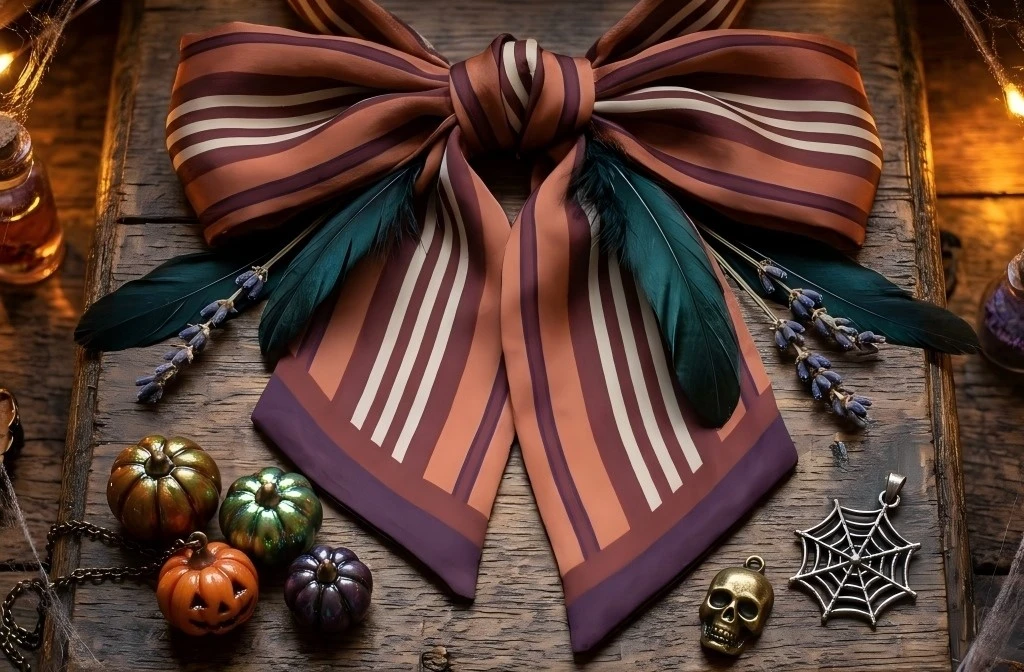
Which Halloween Scarf Designs Are Suitable for Seasonal Collections?
The design should reflect the intended product range, target price, and fabric surface. Buyers can organize artwork into several styles to create a coordinated collection without repeating the same print across every scarf.
|
Design Style |
Common Visual Elements |
Artwork Considerations |
|---|---|---|
|
Classic Halloween |
Pumpkins, bats, ghosts, spiderwebs |
Define motif size, spacing, and background color |
|
Gothic Patterns |
Skulls, ravens, moons, dark florals |
Check fine-line clarity and contrast against dark backgrounds |
|
Autumn-Inspired Prints |
Falling leaves, branches, pumpkins, warm seasonal colors |
Coordinate the palette with the collection's other accessories |
|
Cartoon Motifs |
Illustrated ghosts, smiling pumpkins, playful characters |
Confirm graphic resolution and rights to use licensed artwork |
|
Geometric Patterns |
Orange-and-black checks, stripes, repeating diamonds |
Specify line width, repeat size, and alignment |
|
Novelty Typography |
Halloween phrases, decorative lettering, themed symbols |
Check spelling, font legibility, and text placement after folding |
For repeating patterns, buyers should provide the repeat dimensions and a full-size artwork file. For scarves featuring a central illustration or border, the specification should identify the position of the main graphic relative to the finished edges.
How Should Buyers Select Fabric for Custom Halloween Prints?
Fabric selection affects how the scarf drapes, how the print appears, and which printing processes can be used. Buyers should compare the material against the intended product design rather than selecting a fabric based on appearance alone.
- Polyester: Suitable polyester fabrics can support sublimation or other compatible textile-printing methods. Buyers should confirm the fabric construction and printing process before approving a multicolor design.
- Cotton: Cotton scarves can use suitable pigment or reactive printing processes, depending on the fabric and finishing requirements. Buyers should check the hand feel, color appearance, and any required post-print treatment.
- Silk: Silk can accommodate detailed printed designs when the ink system and finishing process are appropriate for the fabric. Sampling should assess color reproduction, surface feel, and the effect of finishing on the material.
- Wool and wool blends: These fabrics suit cooler-weather accessories, but their texture and thickness can affect how fine details appear. Buyers should confirm whether direct printing, another textile process, or a woven pattern is more appropriate.
When comparing materials, buyers should also record fabric composition, weight, dimensions, and finishing requirements. These details help suppliers quote the same product specification and reduce substitutions during production.
Which Printing Methods Should Buyers Compare?
The right printing method depends on the fabric, artwork complexity, order quantity, and required appearance. Buyers should request process recommendations from the production partner and verify them with a physical sample.
Digital textile printing applies artwork directly through a compatible ink system. It can accommodate multicolor illustrations, gradients, and intricate Halloween graphics without requiring a separate screen for every color.
Before ordering, buyers should confirm the printable width, fabric compatibility, color-management process, and any required pretreatment or fixation. A sample should show whether small bats, thin spiderweb lines, and lettering remain clear on the actual fabric.
Screen printing transfers ink through prepared screens, usually with a separate screen for each color. It can suit bold shapes, simplified graphics, and repeated designs with a defined color palette.
The quotation should identify setup charges, color count, print dimensions, and minimum order requirements. Buyers should also inspect the sample for coverage, registration between colors, and the appearance of the printed area after the scarf is finished.
Sublimation printing transfers dye through heat onto compatible materials, particularly suitable polyester fabrics. It can reproduce detailed graphics and multicolor layouts across the scarf surface.
This method should not be assumed suitable for cotton, silk, or every blended fabric. Buyers should verify material compatibility and check the approved sample for color appearance, pattern placement, and any differences between the digital artwork and finished textile.
Some seasonal patterns can be formed through colored yarns rather than surface printing. Yarn-dyed construction can suit stripes and checks, while jacquard weaving can create selected repeating motifs within the textile structure.
These options require different development steps from printed artwork. Buyers should compare pattern complexity, fabric construction, order quantity, and sampling requirements before choosing between woven and printed designs.
What Artwork Details Should Buyers Confirm Before Sampling?
Incomplete artwork instructions can lead to incorrect pattern scale, inconsistent colors, or graphics positioned too close to the scarf edges. Buyers should prepare a clear specification before requesting a sample.
- Finished dimensions: State the required length and width, including fringe or other edge details.
- Artwork format: Supply the file type requested by the production partner and confirm that the resolution supports the intended print size.
- Color references: Identify the required colors and agree on how the physical sample will be assessed, since screen colors may differ from printed fabric.
- Pattern repeat: Provide repeat width and height for continuous designs, along with the direction in which the pattern should run.
- Placement requirements: Mark the locations of borders, corner graphics, central illustrations, and text.
- Intellectual property: Confirm permission to use any third-party characters, logos, or licensed artwork before production.
- Finishing instructions: Specify hemming, rolled edges, fringe, labels, and any other construction details that affect the finished design.
For large or multicolor prints, buyers should review a sample before approving bulk production. Changes to motif scale, color, or edge placement after approval may require revised artwork and additional sampling.
How Can Buyers Inspect Printed Halloween Scarves?
Inspection should compare finished scarves with the approved sample and written specification. Different checks are needed for artwork, fabric construction, and finishing.
|
Inspection Item |
What to Check |
Suggested Check |
|---|---|---|
|
Color consistency |
Differences between pieces or from the approved reference |
Compare under consistent lighting |
|
Print definition |
Blurred edges, missing details, or illegible text |
Inspect fine lines and small motifs |
|
Pattern alignment |
Misaligned repeats, borders, or central graphics |
Compare placement with the artwork layout |
|
Surface condition |
Stains, holes, pulled yarns, or unwanted marks |
Inspect both sides of representative pieces |
|
Edge finishing |
Loose threads, uneven hems, or fraying |
Check the full perimeter |
|
Dimensions |
Length and width after finishing |
Measure samples against the approved specification |
|
Colorfastness |
Color transfer or fading under specified conditions |
Use agreed test methods where required |
Buyers should establish acceptable defect limits and the inspection sampling plan before bulk production. If the order requires colorfastness, dimensional stability, or other textile performance tests, the specification should name the applicable test method and acceptance criteria rather than relying on a general statement about print durability.
What Factors Determine the Cost of Custom Halloween Scarves?
A quotation should separate the scarf, print, finishing, and packaging requirements so buyers can compare suppliers on an equivalent basis.
Fabric composition and weight: Material selection affects the textile cost and may change the available printing processes.
Artwork complexity: Detailed illustrations, multiple colors, large print areas, and repeat-pattern preparation can affect setup and production costs.
Printing method: Digital printing, screen printing, sublimation, and woven construction have different material and setup requirements.
Order quantity by design: Splitting an order across many patterns or colors can change the production cost per design.
Finishing and branding: Hemming, fringe, woven labels, hangtags, and custom packaging add separate requirements to the finished product.
Sampling and revisions: Buyers should confirm whether artwork preparation, sample production, and additional revision rounds are charged separately.
To obtain a comparable quotation, provide the fabric specification, finished dimensions, artwork, quantity by design, finishing details, branding requirements, and delivery destination. If the printing method remains undecided, ask suppliers to quote suitable alternatives using the same product requirements.
How Can Buyers Keep Seasonal Scarf Orders on Schedule?
Halloween collections have a defined selling period, so buyers should coordinate artwork approval, material preparation, production, and shipment from the start.
Confirm material availability: Ask whether the selected fabric is in stock or requires additional sourcing, dyeing, or preparation.
Set sample approval dates: Consolidate feedback on fabric, color, pattern scale, and finishing to avoid repeated revision rounds.
Approve bulk specifications in writing: Record the final artwork version, dimensions, printing method, and label details before production begins.
Coordinate packaging components: Confirm when labels, hangtags, individual bags, or gift boxes will reach the agreed packing location.
Reserve time for inspection: Include checks, possible corrective work, and packing in the schedule rather than treating production completion as the dispatch date.
Confirm transport arrangements: Ask the logistics provider for current transit estimates and required shipping documents, then work backward from the target arrival date.
If a fabric, artwork, or packaging component becomes unavailable, buyers should review the impact on the schedule before approving a substitute. Any change to the material or print process should be checked against the product specification and approved sample.
Why Work with XingHeMei on Custom Halloween Scarves?
Hangzhou XingHeMei Imp. & Exp. Co., Ltd. coordinates scarf sourcing, product development communication, and export arrangements with specialist partner factories. Buyers can discuss material selection, print requirements, private-label details, and shipment planning as part of one sourcing brief.
Specification coordination: Buyers can provide the fabric composition, dimensions, artwork, color references, and finishing requirements for communication with the relevant production partners.
Sample and artwork review: The sample approval process can cover print clarity, color appearance, pattern alignment, edge finishing, and finished dimensions. Approved details should be recorded so that bulk production follows the same reference.
Private-label arrangements: Brand labels, hangtags, and packaging requirements can be included in the order specification. The sourcing plan should clarify which partner supplies each component and who handles final assembly.
Production and shipment follow-up: Buyers can confirm milestone dates, inspection requirements, packaging deadlines, and delivery arrangements with the relevant parties. Specific factory responsibilities, quality-control coverage, and shipping commitments should be agreed before the order is placed.